How we manage driver advertising

We save you advertising dollars: more qualified drivers for each dollar you already spend. Open any explanation for more detail.

Illustration: a truck and an ad-performance laptop with two gauges moving from higher to lower cost per hire, beside three points: target better, adjust daily, spend smarter.

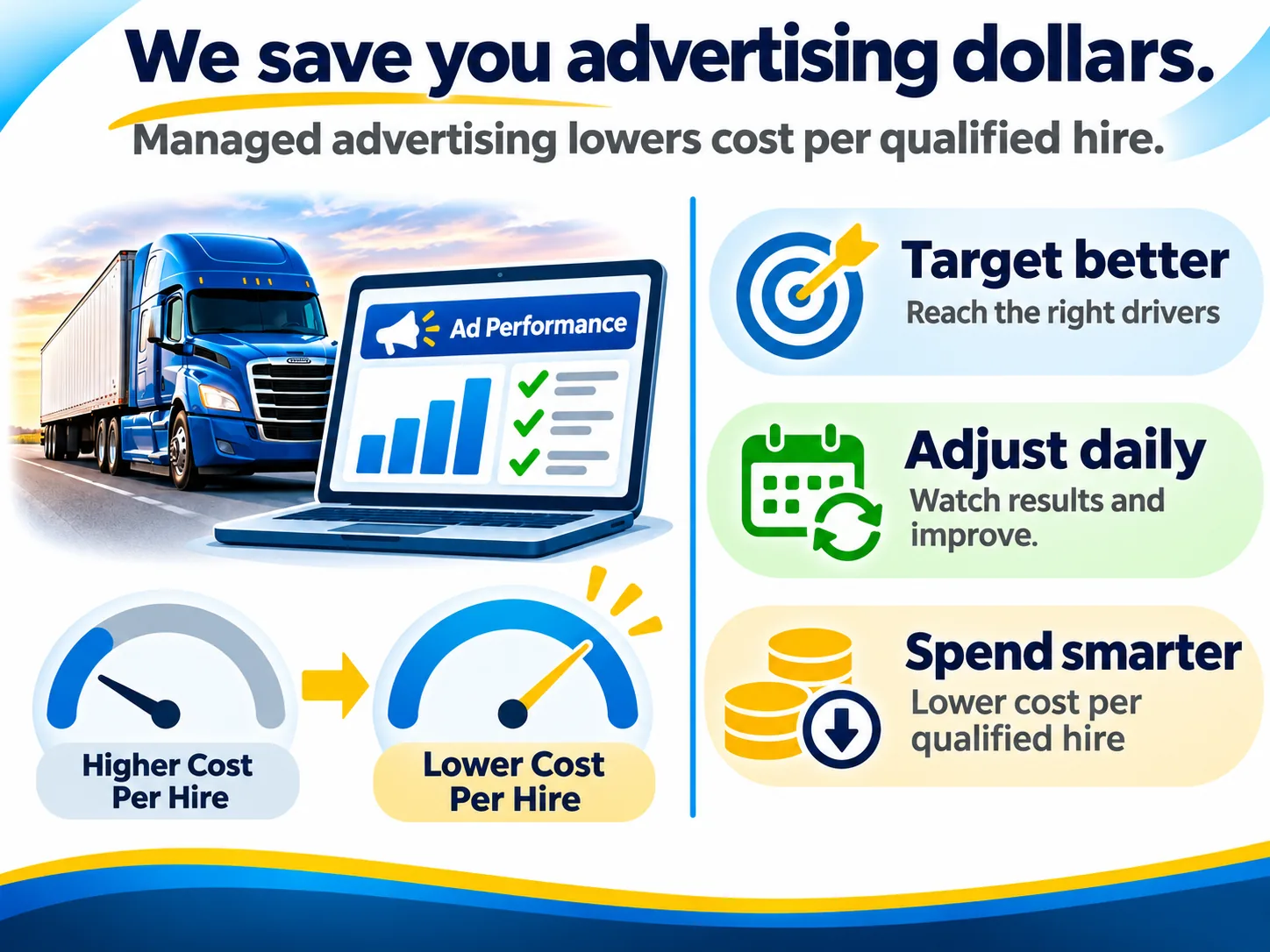
We save you advertising dollars. Managed advertising lowers cost per qualified hire. Target better: reach the right drivers. Adjust daily: watch results and improve. Spend smarter: lower cost per qualified hire.

We save you advertising dollars

Better driving gets more miles from each gallon. Better campaign decisions get more qualified drivers from each advertising dollar.

How we save you advertising dollars

We aim every ad at drivers who fit the job, adjust the campaign every day, and judge it by what each qualified hire costs.

In one of our recent campaigns, as we managed it, the ads drew more clicks for every 100 views (3.2 rising to 4.3) and more applications for every 100 clicks (4.0 rising to 5.6). The ad cost of each completed application fell about 13%.
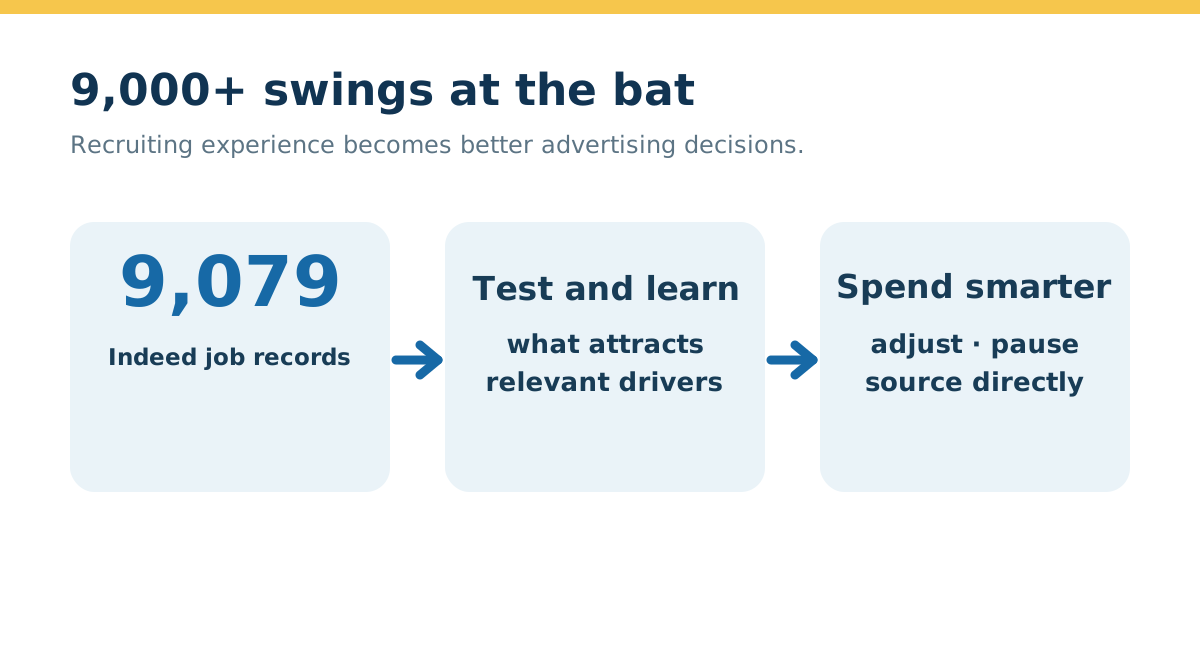
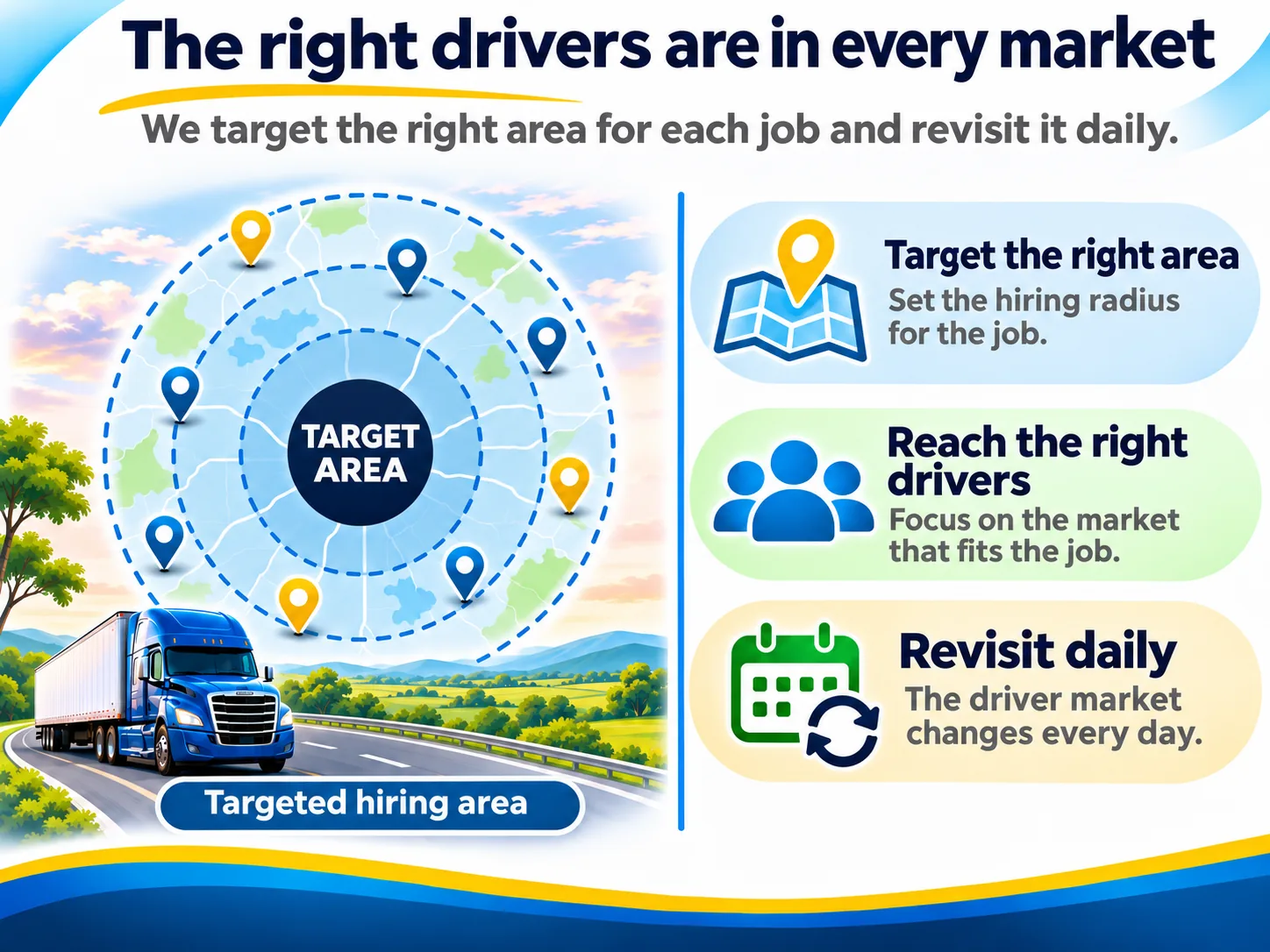
Diagram: 9,079 Indeed job records lead to testing what attracts relevant drivers, then to spending smarter by adjusting, pausing and sourcing directly.

9,000+ swings at the bat. Recruiting experience becomes better advertising decisions. 9,079 Indeed job records, then test and learn what attracts relevant drivers, then spend smarter: adjust, pause, source directly.

More than 9,000 swings at the bat

More than 9,000 job records in our Indeed account inform every decision we make about your ads.

What that experience covers

We know how to write a job description drivers read and how to format a listing for Google Jobs. We know which Indeed placement fits which job, and how to post without duplicate listings.

We know when to cut spending, when to move it, and when to raise it for a while.

Illustration: a truck on a road beside a map with a circled target hiring area and location pins, with three points: target the right area, reach the right drivers, revisit daily.

The right drivers are in every market. We target the right area for each job and revisit it daily. Target the right area: set the hiring radius for the job. Reach the right drivers: focus on the market that fits the job. Revisit daily: the driver market changes every day.

The right drivers are in every market

Each job gets its own hiring area, and we revisit it daily as drivers’ availability changes.

An example market

For an Orlando team-driver job, a search of the area within about two hours showed roughly 62,000 driver profiles. That is the pool a recruiter searches to find the drivers who fit.

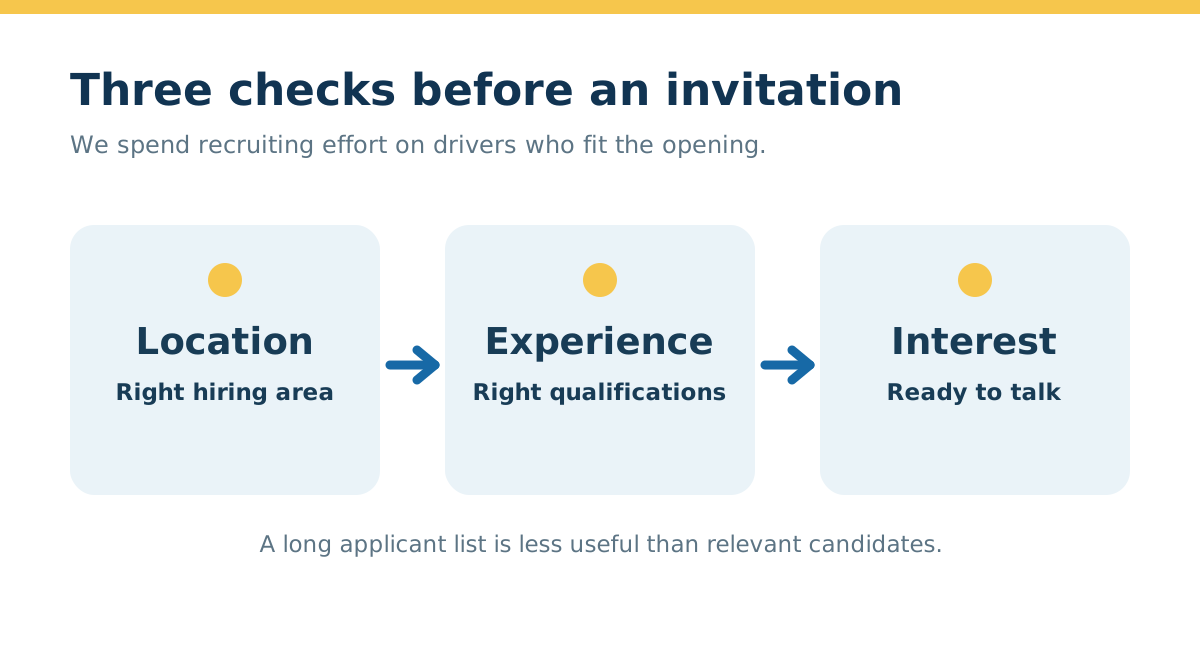
Diagram: three checks before inviting a driver: location in the right hiring area, the right experience, and interest in talking.

Three checks before an invitation. We spend recruiting effort on drivers who fit the opening. Location: right hiring area. Experience: right qualifications. Interest: ready to talk. A long applicant list is less useful than relevant candidates.

Three checks before an invitation

We bring drivers into view three ways: your ProHRHQ job listing, paid placements chosen for the job and market, and direct searches with personal invitations.

Real Indeed screens

Tap or click a screen to open it full size.

Indeed Find candidates screen for the CDL-A regional company driver job in Waco, Texas, showing 712 resumes that match the search and 25 invites.

Indeed, Find candidates, CDL-A Regional Company Driver (W-2), Waco, TX 76712. 25 invites. 712 resumes match your criteria.

Real Indeed screen, November 2026: 712 résumés match the search for a Waco, Texas job. A recruiter picks the few worth inviting.
How the listing and invitations work

Our recruiter writes your ProHRHQ job listing, formatted for Google Jobs, and you review it before it goes live.

On Indeed’s Premium plan we can invite up to 25 drivers a day. Each invitation is written for the job, and we follow up with drivers who answer.

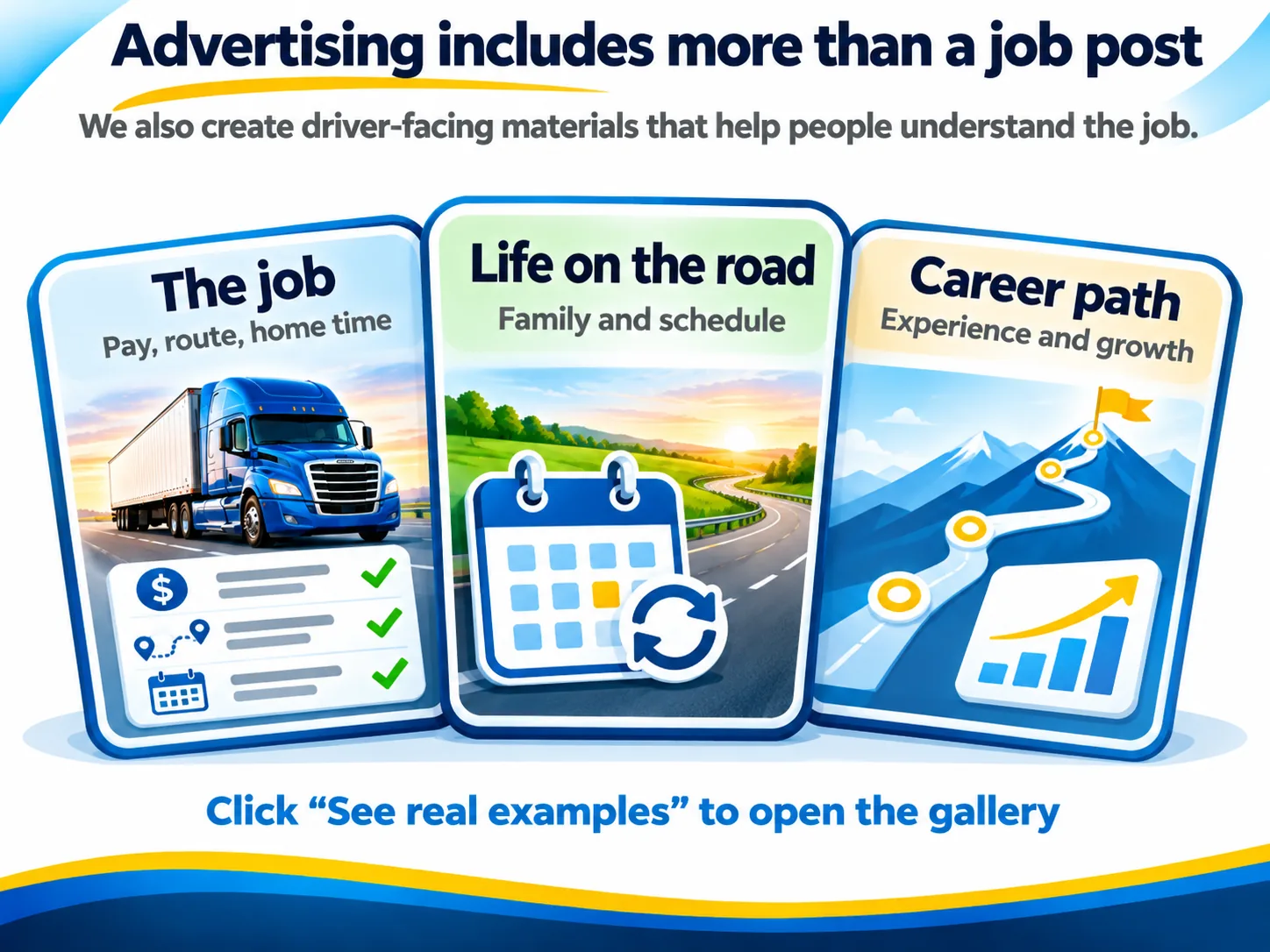
Illustration: three driver-facing cards, the job with pay, route and home time, life on the road with family and schedule, and a career path with experience and growth.

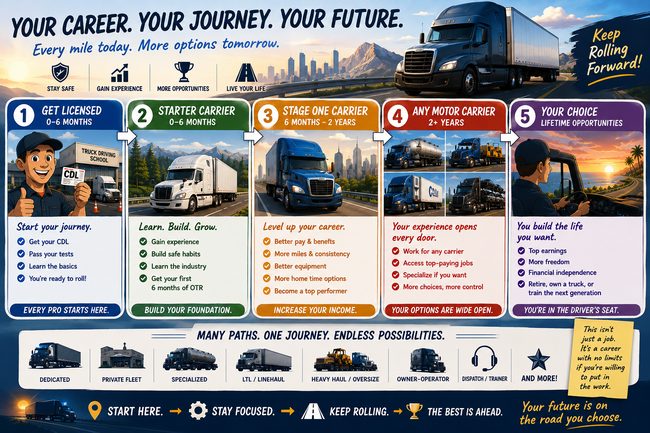
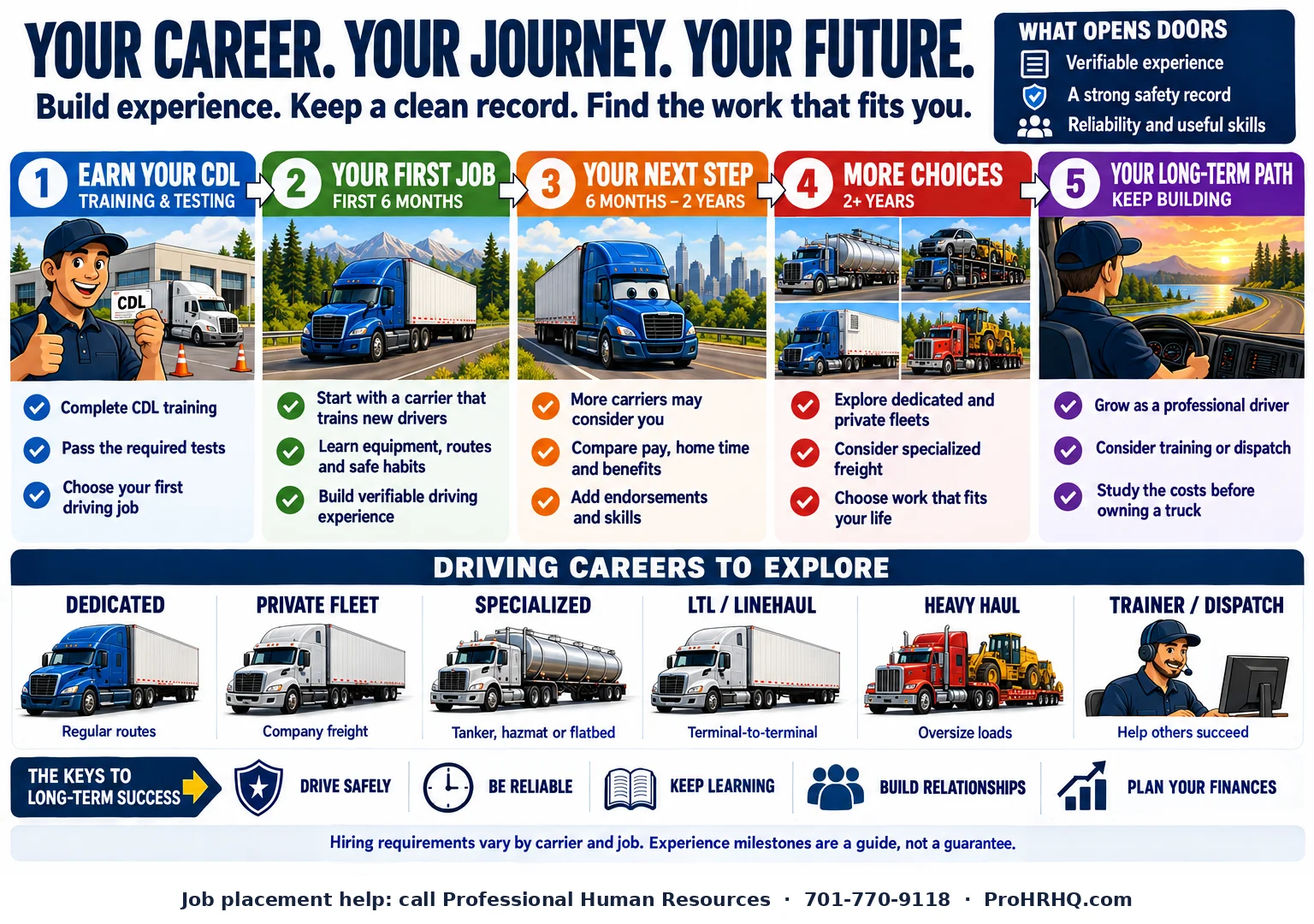
Advertising includes more than a job post. We also create driver-facing materials that help people understand the job. The job: pay, route, home time. Life on the road: family and schedule. Career path: experience and growth.

Advertising includes more than a job post

We create driver-facing material that explains pay, routes, home time and career growth, so drivers and their families understand the job.

What the materials do

Clear pictures answer the questions drivers and their families ask before they apply: what the pay is, how often they are home, and where the job can lead.

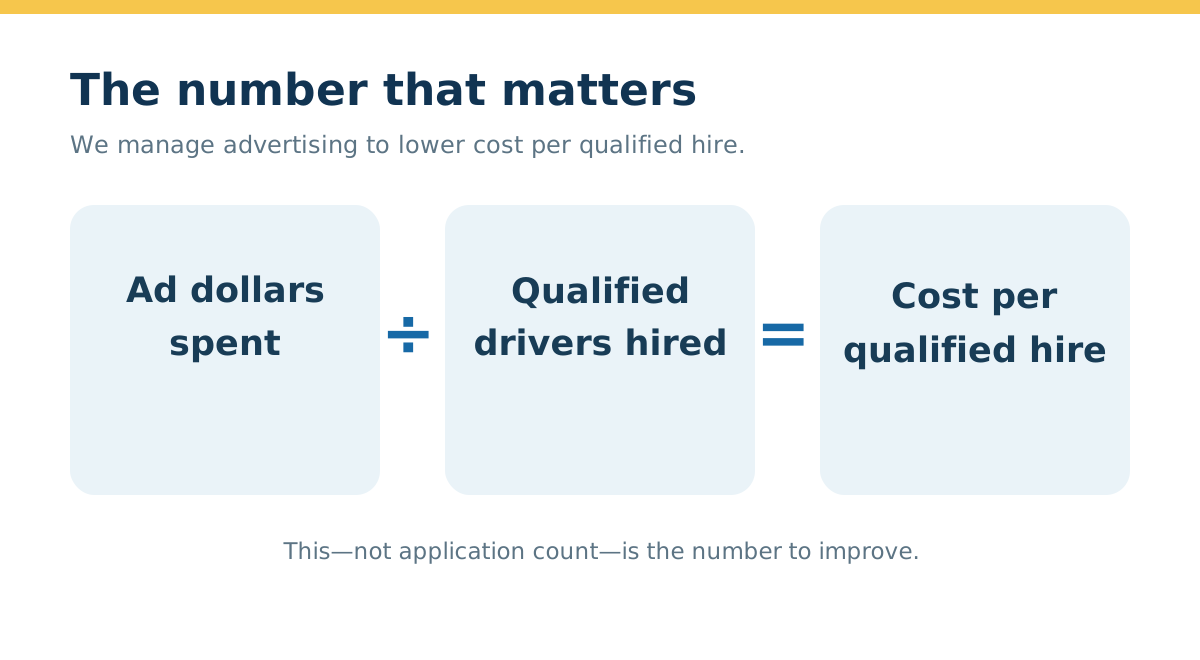
Diagram: ad dollars spent divided by qualified drivers hired equals cost per qualified hire, the number we manage advertising to lower.

The number that matters. We manage advertising to lower cost per qualified hire. Ad dollars spent, divided by qualified drivers hired, equals cost per qualified hire. This, not application count, is the number to improve.

Daily decisions reduce wasted spending

Every day we watch results and spending, adjust wording, area or budget, and turn on Premium features only when they pay off.

How the spending is managed

The budget is sized to the assignment and moves with the results. A large assignment can spend many times what a small one does, raised when a job is urgent or hard to fill and lowered when the extra reach is no longer needed.

Diagram: the advertising budget as one bar, 75% paid exposure on job boards and outreach channels and 25% campaign management.

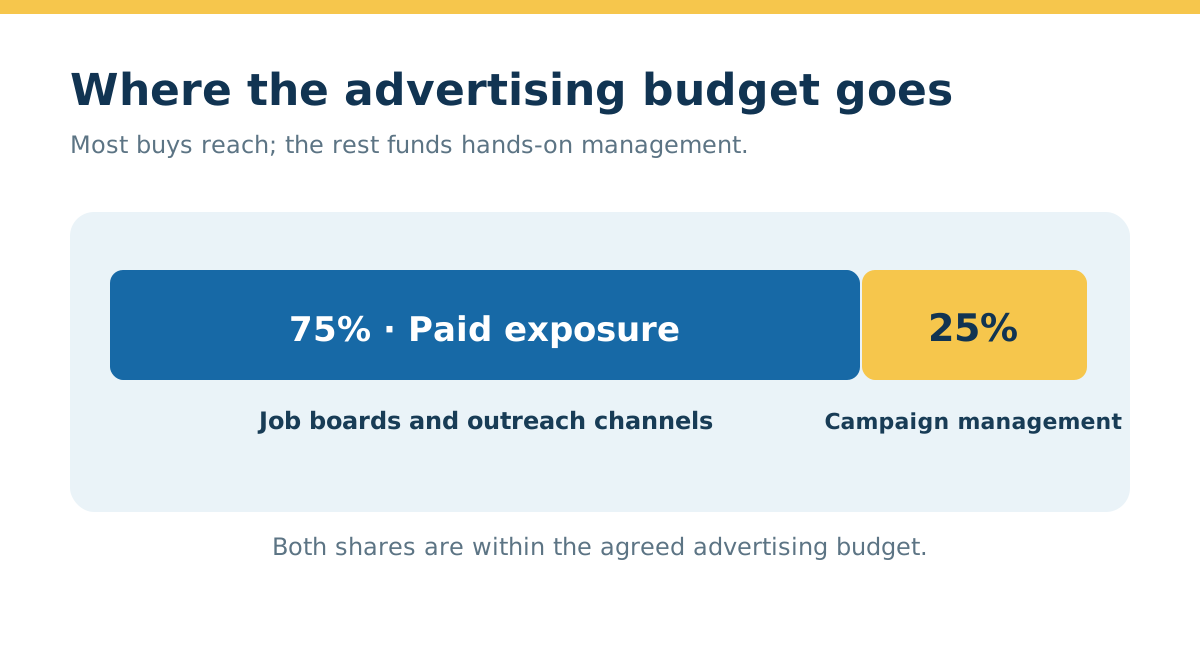
Where the advertising budget goes. Most buys reach; the rest funds hands-on management. 75%: paid exposure on job boards and outreach channels. 25%: campaign management. Both shares are within the agreed advertising budget.

What the advertising budget buys

One agreed advertising budget: about 75% buys paid exposure, and about 25% pays for the people who create the driver materials and manage the campaign.

What the 25% pays for

Writing and editing the job listing, building driver materials, watching the campaign daily, searching for drivers and sending invitations.

Diagram: the carrier supplies job facts and timely decisions, ProHRHQ runs the campaign and direct sourcing, and together they build a qualified hiring pipeline.

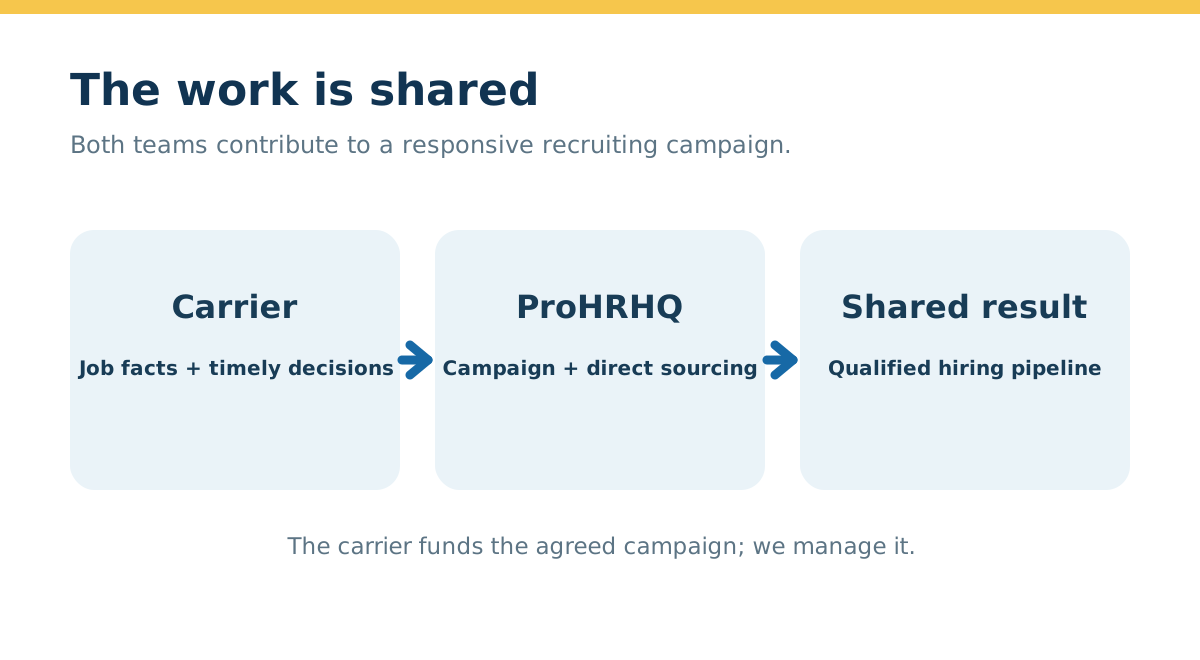
The work is shared. Both teams contribute to a responsive recruiting campaign. Carrier: job facts and timely decisions. ProHRHQ: campaign and direct sourcing. Shared result: a qualified hiring pipeline. The carrier funds the agreed campaign; we manage it.

Why the advertising budget is separate

Ads and materials are paid for before a driver is hired; our recruiting fee is earned only when one is. A carrier-funded campaign keeps the recruiting fee lower.

CostPaid toWhat it pays for
Advertising budgetJob boards (about 75%) and ProHRHQ campaign work (about 25%)Reaching drivers, driver materials and daily campaign management. You fund the agreed amount.
Recruiting feeProHRHQEarned when a driver is hired. Set per driver in your proposal.
Platform feeProHRHQThe applicant system: the shared recruiting board, the online application and the driver files.
What each side brings

You fund the agreed campaign, share accurate job facts and make prompt hiring decisions. We run the campaign, create the materials and bring you drivers who fit.

If hiring plans change, for example from ten drivers to two, we agree on a new budget together. Every cost is set in your written proposal before work starts.

Illustration: advertising plus marketing material plus management equals recruiting and sales, above a truck at sunset and the result: more qualified drivers for less money.

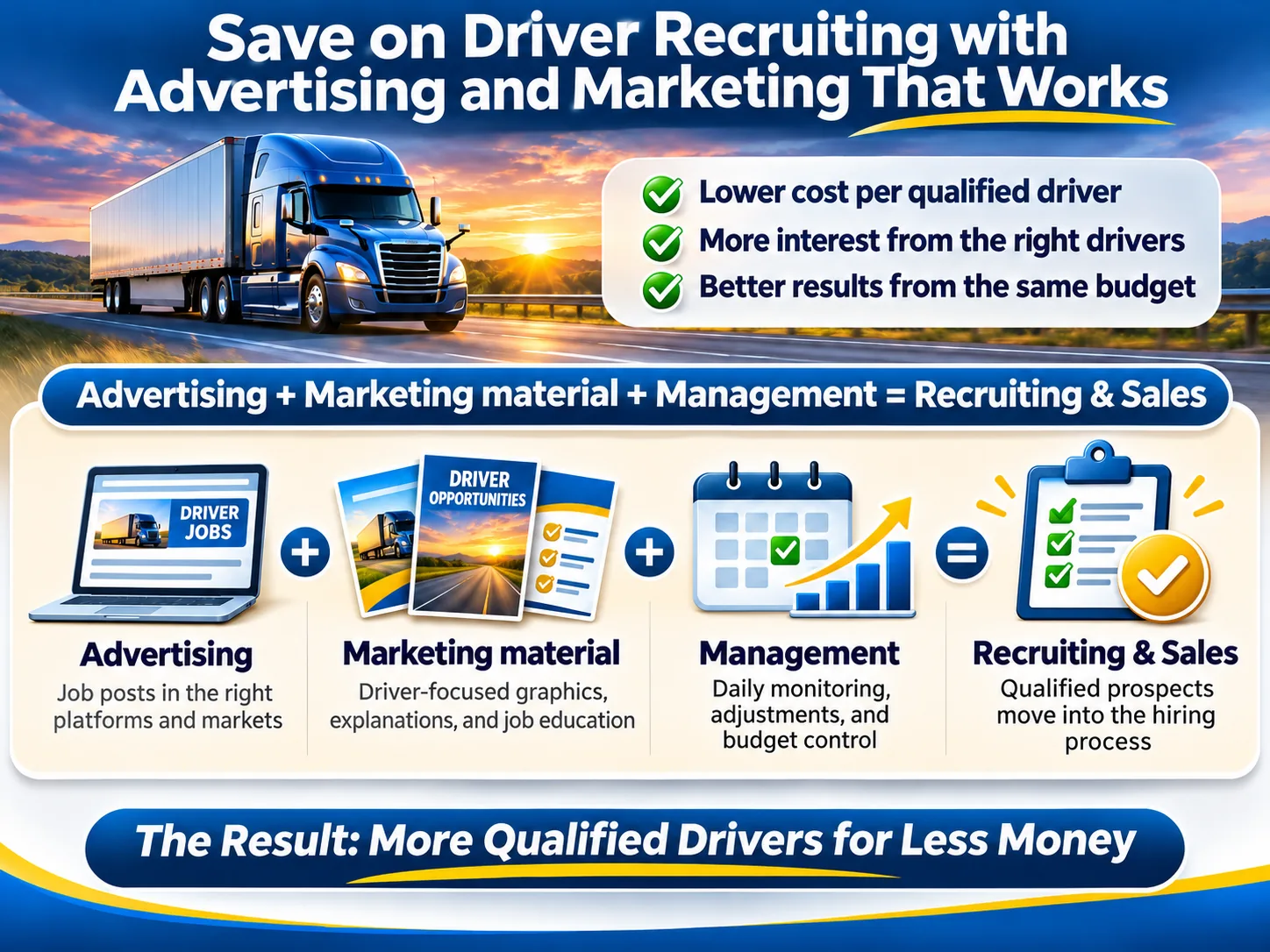
Save on driver recruiting with advertising and marketing that works. Lower cost per qualified driver, more interest from the right drivers, better results from the same budget. Advertising (job posts in the right platforms and markets) plus marketing material (driver-focused graphics, explanations and job education) plus management (daily monitoring, adjustments and budget control) equals recruiting and sales (qualified prospects move into the hiring process). The result: more qualified drivers for less money.

Advertising, marketing material and management lead to recruiting and sales

Advertising brings attention from the right drivers, marketing material explains the offer, and daily management moves interested drivers into your hiring process.

What happens next

When an interested driver replies, our recruiting work begins: the conversation, the application and the file your safety team reviews.

Discuss a hiring plan

Tell us about your job and your budget. We will reply by email. Fees, advertising budgets and terms are set in each carrier’s written proposal.

Results vary by job, area and season.