More detail
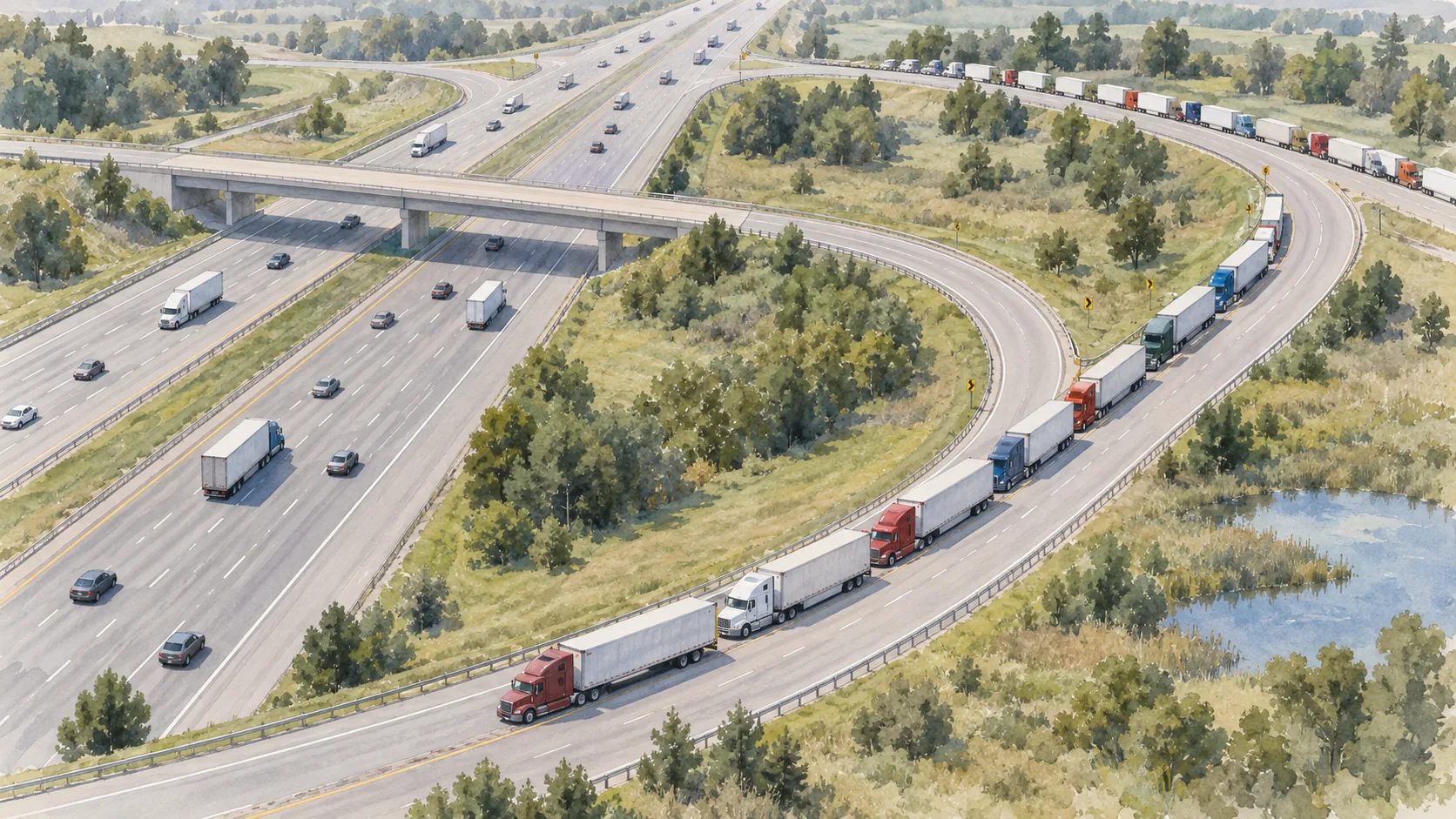
Drivers are still forced onto ramps, shoulders, and improvised spaces when legal parking fills up.
Truck Stop Light
The idea comes from several things the freight industry already knows: truck parking is short, full travel centers are expensive, large carriers already use relay yards, and drivers still need fuel, clean restrooms, light, security, and a place to stop.
Drivers are still forced onto ramps, shoulders, and improvised spaces when legal parking fills up.
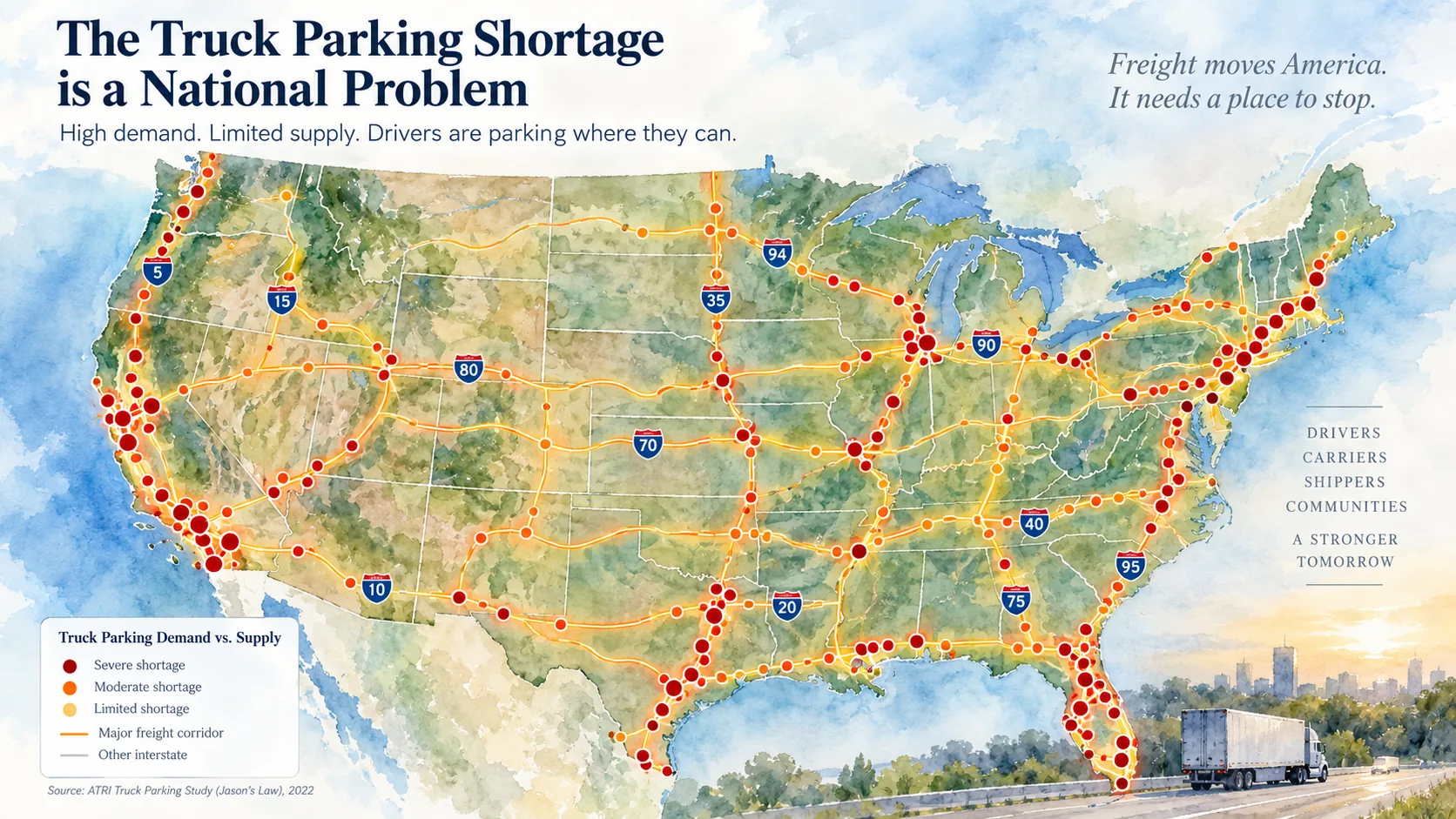
The same basic problem appears wherever truck traffic is heavy and safe stopping space has not kept pace.
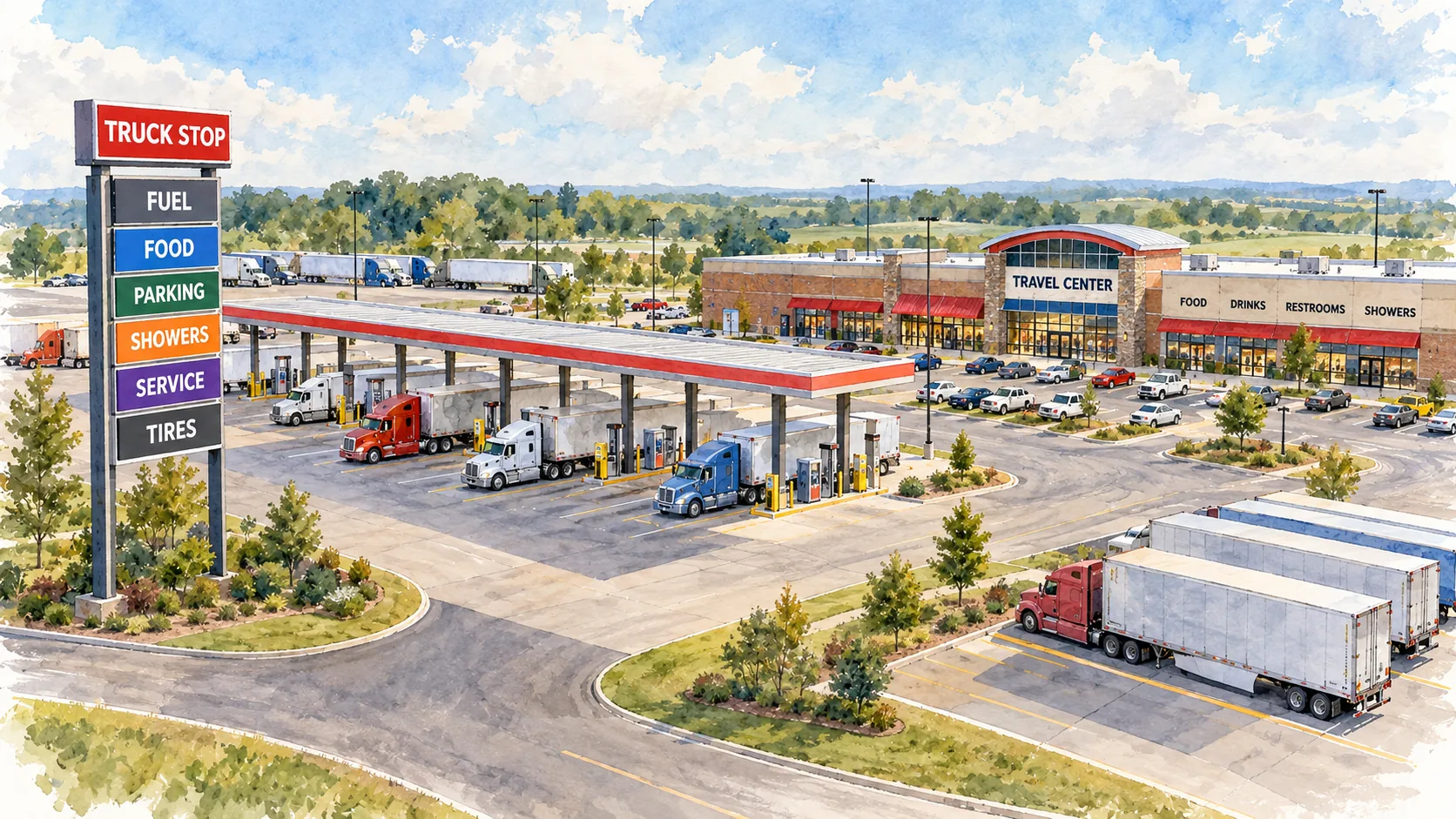
They provide fuel, food, restrooms, showers, parking, and services. They work. But they are large developments.
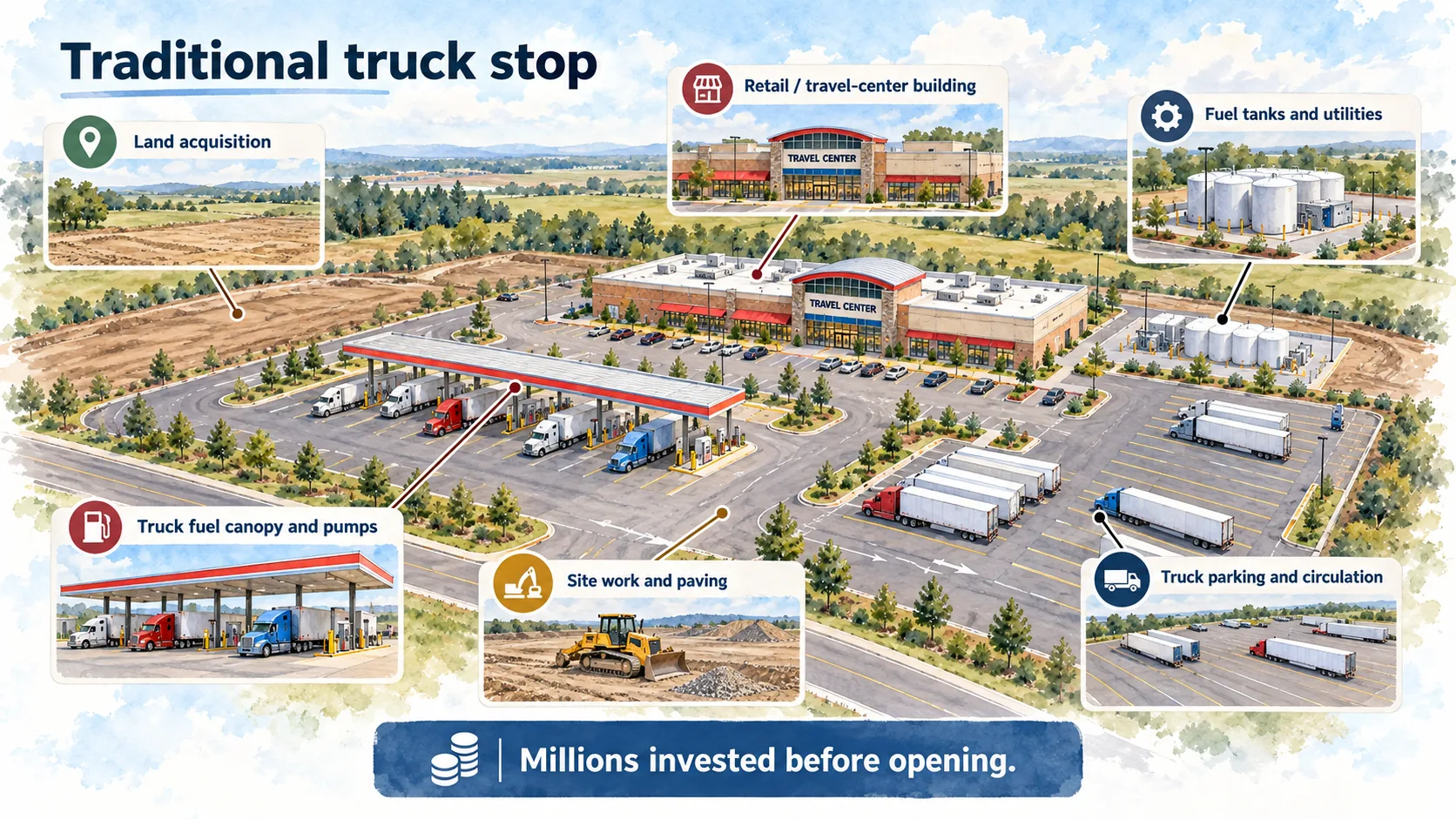
Traditional truck stop.
Land acquisition. Retail / travel-center building. Fuel tanks and utilities. Truck fuel canopy and pumps. Site work and paving. Truck parking and circulation.
Millions invested before opening.
Land, paving, buildings, fuel systems, parking, and circulation all arrive before meaningful operating income.
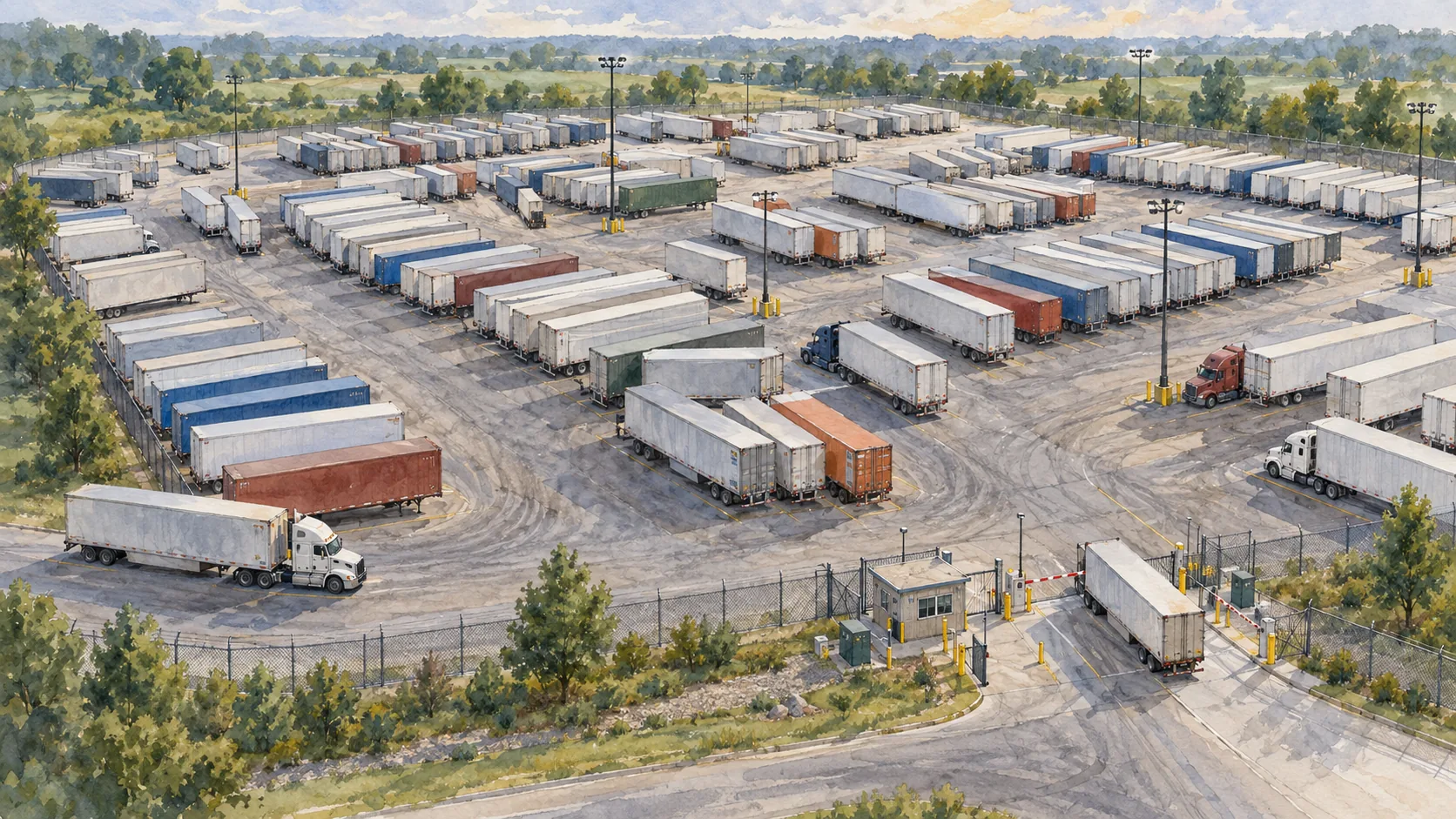
They stage trailers, exchange equipment, relay loads, and keep freight moving. Real freight yards are busy and messy because freight is always moving.
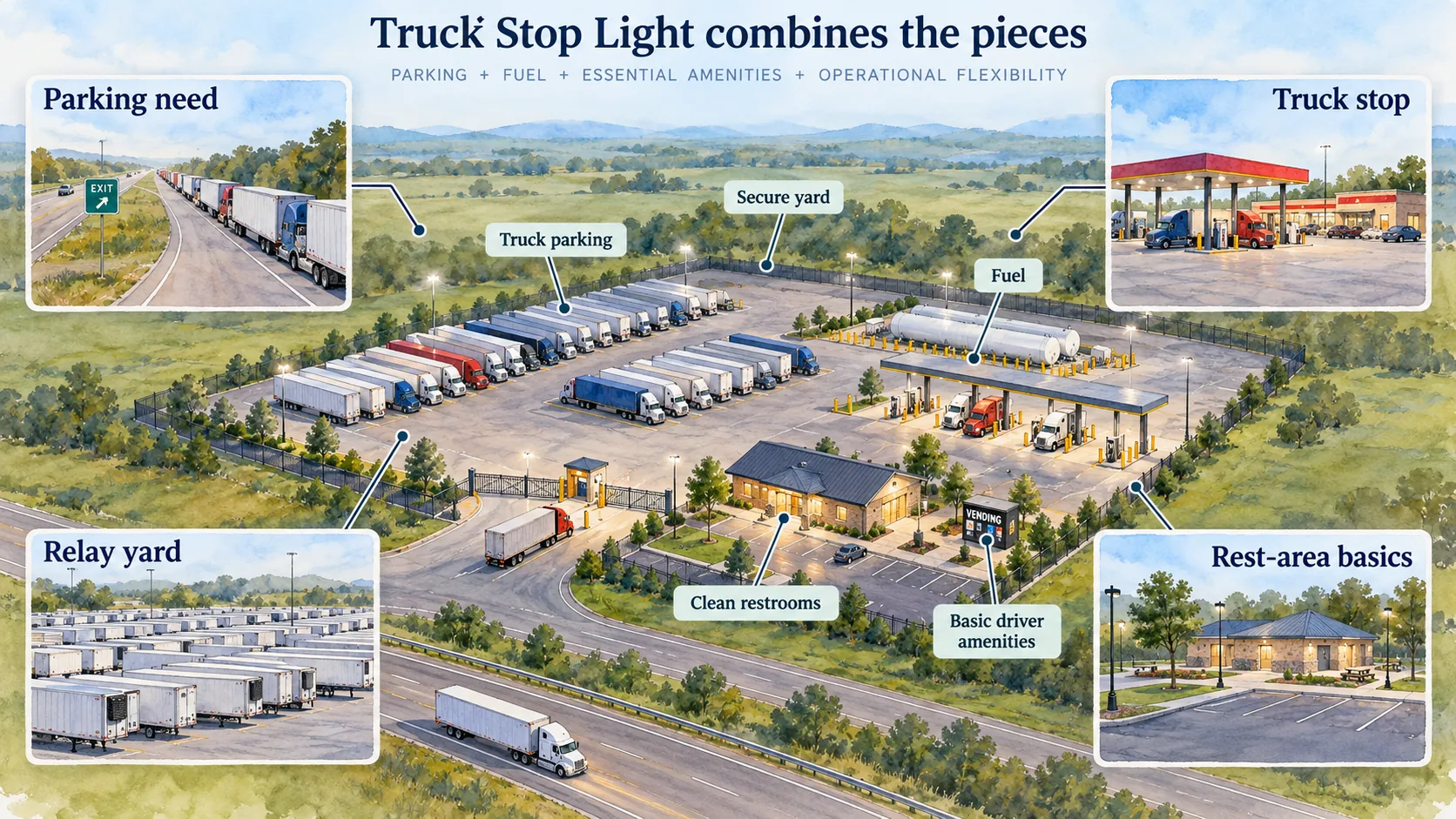
Truck Stop Light combines the pieces.
Parking + Fuel + Essential Amenities + Operational Flexibility.
Parking need. Truck stop. Relay yard. Rest-area basics.
Secure yard. Truck parking. Fuel. Clean restrooms. Basic driver amenities (vending).
Relay and staging. Secure truck parking. Fuel. Clean restrooms. Lighting. Vending and basic driver support. Enough to solve the operating problem without building a full retail travel center first.
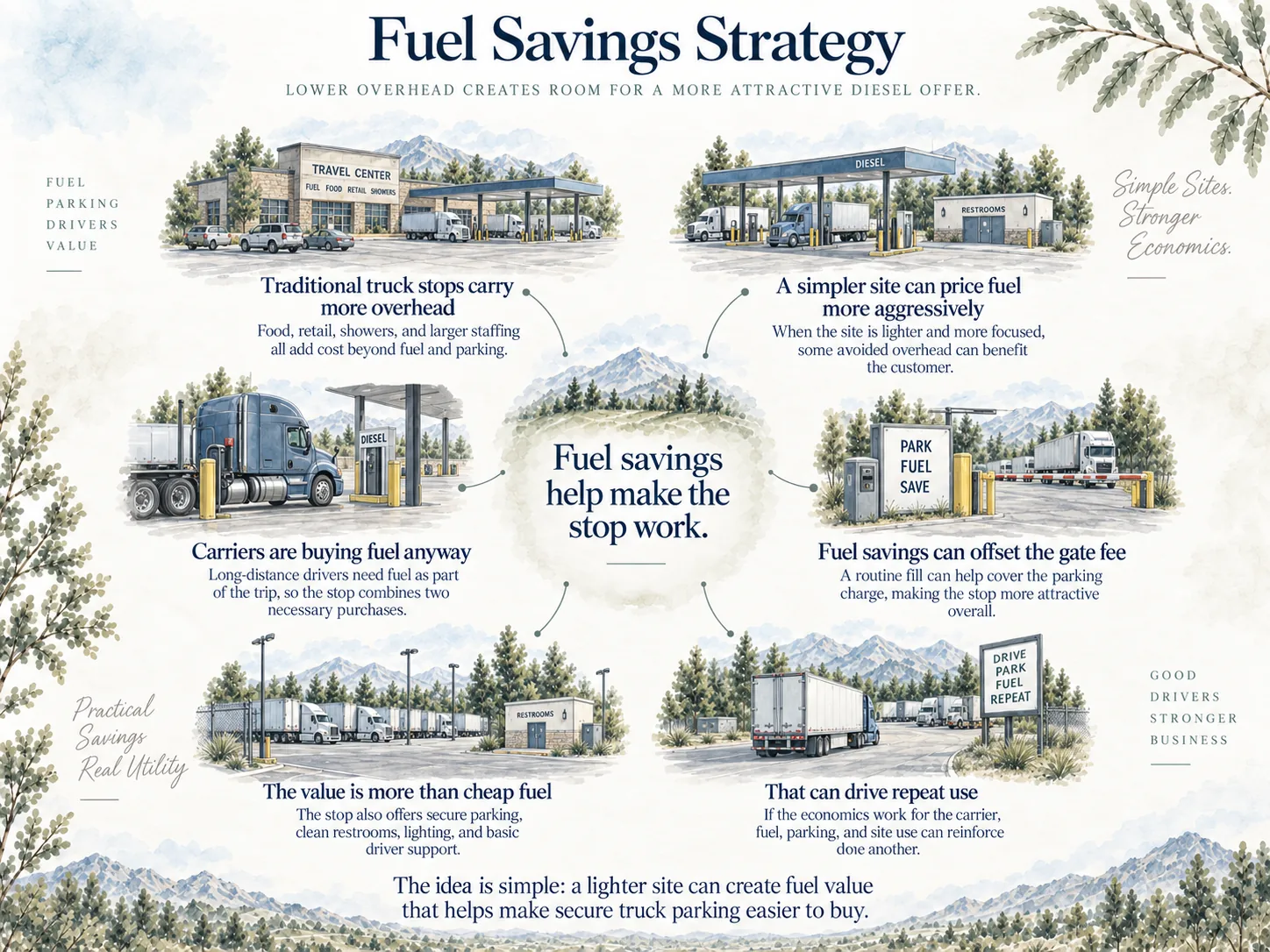
Fuel Savings Strategy. Lower overhead creates room for a more attractive diesel offer.
Traditional truck stops carry more overhead: food, retail, showers, and larger staffing all add cost beyond fuel and parking.
A simpler site can price fuel more aggressively: when the site is lighter and more focused, some avoided overhead can benefit the customer.
Carriers are buying fuel anyway: long-distance drivers need fuel as part of the trip, so the stop combines two necessary purchases.
Fuel savings can offset the gate fee: a routine fill can help cover the parking charge, making the stop more attractive overall.
The value is more than cheap fuel: the stop also offers secure parking, clean restrooms, lighting, and basic driver support.
That can drive repeat use: if the economics work for the carrier, fuel, parking, and site use can reinforce one another.
Fuel savings help make the stop work.
The idea is simple: a lighter site can create fuel value that helps make secure truck parking easier to buy.
A lighter site carries less overhead, so some of that saving can go into a sharper diesel price, and a routine fill can help offset the gate fee.
Tell us your lanes
Barstow, California, where the I-15, I-40 and CA-58 corridors connect, is one example we are studying. It is a concept only: no site has been secured, and there is no opening date or price.
The most useful answer is short: which lanes come into Southern California, and about how often a trailer exchange would help. If a colleague handles terminals or network planning, their name is just as useful.
Reply to the email that brought you here, or write or call Michael Hoffman, who answers personally. More projects and research are on North Star's iPlan site, behind a short access agreement.